Introduction
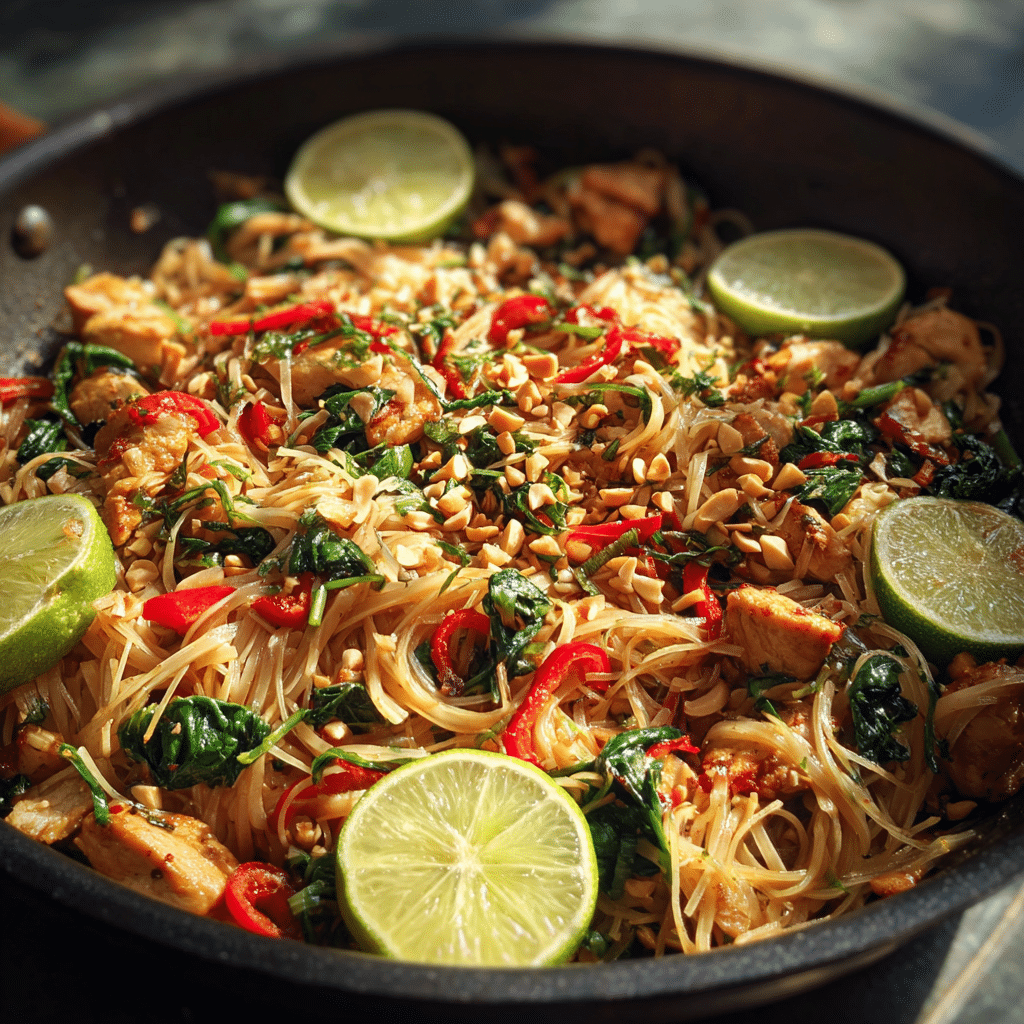
There’s something magical about that first bite of Pad Thai the mix of sweet, salty, tangy, and nutty flavors that instantly transports you to the bustling streets of Bangkok. I still remember the first time I tried Pad Thai during a trip to Thailand; the sizzling wok, the aroma of tamarind, and the crunch of peanuts made it unforgettable. When I returned home, I was determined to recreate that same authentic flavor in my kitchen. After dozens of attempts, I finally mastered the art of homemade Pad Thai a dish that’s now a family favorite. Whether you’re craving an easy Thai dinner or looking for a quick 30-minute Thai noodles recipe, this guide will show you how to make perfect chicken Pad Thai that rivals your favorite takeout.
The Story Behind Pad Thai and Why It’s So Loved
The Origins of Pad Thai
Pad Thai isn’t just a meal it’s a story of Thailand’s history and culture. Introduced in the 1930s, it became Thailand’s national dish, designed to promote local ingredients like rice noodles and fish sauce. Today, it’s one of the world’s most recognized Asian dishes, known for its balance of flavors and quick preparation. Each ingredient in Pad Thai tamarind, lime, fish sauce, and chili represents Thailand’s culinary identity.
Why Pad Thai Works Every Time
The secret to great homemade Pad Thai is all about balance. Sweet brown sugar meets tangy tamarind, while the salty soy and fish sauce bring everything together. The chewy rice noodles soak up all that flavor, and the crushed peanuts add texture. It’s comfort food with character fast, flavorful, and unbelievably satisfying. The best part? You can make it in less than 30 minutes, making it an ideal easy Thai dinner any night of the week.
Ingredients You’ll Need for Authentic Homemade Pad Thai
Key Components of Pad Thai
To make an authentic Pad Thai, you’ll need rice noodles, chicken thighs, eggs, and fresh vegetables. The sauce tamarind paste, fish sauce, soy sauce, lime juice, and brown sugar is where the real magic happens. Each element works together to create the perfect sweet-sour harmony.
Fresh Ingredients, Fresh Flavor
Use fresh lime, garlic, and bean sprouts for brightness. Chicken thighs are preferred over breast meat because they stay juicy during the quick stir-fry. For a vegetarian twist, you can skip the chicken and add tofu. The beauty of Pad Thai is its flexibility you can adapt it to your preferences while keeping that signature Thai taste intact.
Cooking the Perfect 30-Minute Pad Thai
Step-by-Step Cooking
- Prep the noodles: Cook rice noodles slightly underdone, drain, and set aside.
- Cook the chicken: Sauté diced chicken in peanut oil until cooked through. Remove from the pan.
- Sauté the veggies: Add more peanut oil, then stir-fry bell peppers, garlic, bean sprouts, and red pepper flakes until fragrant.
- Scramble the eggs: Move the veggies aside, pour in whisked eggs, scramble lightly, and mix.
- Combine everything: Return chicken to the pan, add noodles and sauce, toss to coat evenly.
- Finish and serve: Stir in green onions, top with crushed peanuts, cilantro, and a squeeze of lime juice.
Expert Tips for Success
- Use tamarind paste, not concentrate, for authentic tanginess.
- Don’t overcook the noodles they’ll finish cooking in the sauce.
- Prep everything before starting to cook; Pad Thai cooks fast!
- For spicier noodles, add extra dried chili flakes.
- If gluten-free, use gluten-free soy sauce and check your fish sauce label.
Variations to Try—Chicken Pad Thai and Beyond
Classic Chicken Pad Thai
This is the go-to version for many home cooks. Chicken thighs deliver flavor and tenderness that perfectly complement the sauce. For a lighter version, you can use chicken breast, though you may need to add a touch more oil to prevent dryness.
Other Exciting Variations
- Shrimp Pad Thai: Replace chicken with shrimp for a seafood twist.
- Vegetarian Pad Thai: Swap the fish sauce for soy sauce and add tofu or extra vegetables.
- Spicy Pad Thai: Increase the chili flakes and add a dash of sriracha for heat.
- Low-Sodium Pad Thai: Use reduced-sodium soy sauce and fish sauce to manage salt levels without losing flavor.
Serving, Storing, and Reheating
Serving Pad Thai the Authentic Way
Serve immediately with lime wedges and crushed peanuts on the side. The fresh squeeze of lime just before eating enhances every flavor. Pair it with Thai iced tea or coconut water for the full experience.
How to Store and Reheat
Pad Thai is best fresh, but leftovers store well for up to 2 days. Reheat in a skillet with a splash of water or soy sauce to restore moisture. Avoid microwaving too long it can dry out the noodles. You can even repurpose leftovers into a delicious Thai noodle salad by adding more fresh vegetables.
Frequently Asked Questions
1. What noodles are best for Pad Thai?
Flat rice noodles are traditional and hold sauce beautifully. Avoid using spaghetti or ramen as substitutes.
2. Can I make Pad Thai vegetarian or vegan?
Yes. Skip the fish sauce or use vegan fish sauce and substitute tofu for chicken.
3. How spicy is Pad Thai supposed to be?
Traditional Pad Thai is mildly spicy, but you can adjust the chili flakes to your liking.
4. What if I can’t find tamarind paste?
Mix lime juice and rice vinegar for a quick substitute, though tamarind provides the authentic flavor.
5. Can I meal-prep Pad Thai?
Absolutely! Cook all components separately, store in airtight containers, and combine just before serving.
Conclusion
Making homemade Pad Thai isn’t just about cooking it’s about bringing a bit of Thailand into your kitchen. The balance of flavors, the quick preparation, and the joy of creating a restaurant-worthy meal in under 30 minutes make it one of the most rewarding dishes you can master. Whether you’re preparing a quick weeknight dinner or impressing guests with your Thai cooking skills, this easy Pad Thai recipe proves that authenticity doesn’t have to be complicated.
Print
Pad Thai
- Total Time: 35 minutes
- Yield: 4 servings 1x
Description
Authentic homemade Pad Thai ready in just 30 minutes, packed with chicken, peanuts, and classic Thai flavors.
Ingredients
14 oz rice noodles
2 tbsp peanut oil
1.5 lbs chicken thigh meat – boneless skinless
2 tbsp peanut oil
1 large red bell pepper
6 oz bean sprouts
4 large cloves of garlic
1/2 tsp red pepper flakes
1/4 cup chopped green onion
2 eggs
1/4 cup tamarind paste
1/4 cup fish sauce
3 tbsp low sodium soy sauce
2 tbsp lime juice
1/4 cup brown sugar
1/2 tsp minced dried chili peppers
1/2 cup crushed peanuts
2–3 lime wedges
2 tbsp minced cilantro
Instructions
1. Cook noodles slightly underdone and set aside.
2. Prepare ingredients: slice peppers, mince garlic, dice chicken, whisk eggs.
3. Combine sauce ingredients in a bowl.
4. Sauté chicken in peanut oil until cooked through.
5. Add more oil, cook peppers, bean sprouts, garlic, and red pepper flakes.
6. Scramble eggs in the center of the pan.
7. Add chicken, noodles, and sauce; toss to coat evenly.
8. Add green onions, peanuts, and lime juice before serving.
Notes
Use tamarind paste for authentic flavor.
Don’t overcook noodles; they’ll finish in the sauce.
Adjust chili flakes for spice preference.
- Prep Time: 15 minutes
- Cook Time: 20 minutes
- Category: Dinner
- Method: Stir-Fry
- Cuisine: Thai
Nutrition
- Serving Size: 1 plate
- Calories: 938
- Sugar: 22g
- Sodium: 2276mg
- Fat: 33g
- Saturated Fat: 6g
- Unsaturated Fat: 24g
- Trans Fat: 0g
- Carbohydrates: 113g
- Fiber: 6g
- Protein: 48g
- Cholesterol: 243mg
Keywords: Pad Thai, homemade pad thai, chicken pad thai, easy thai dinner, 30-minute thai noodles, rice noodle stir fry