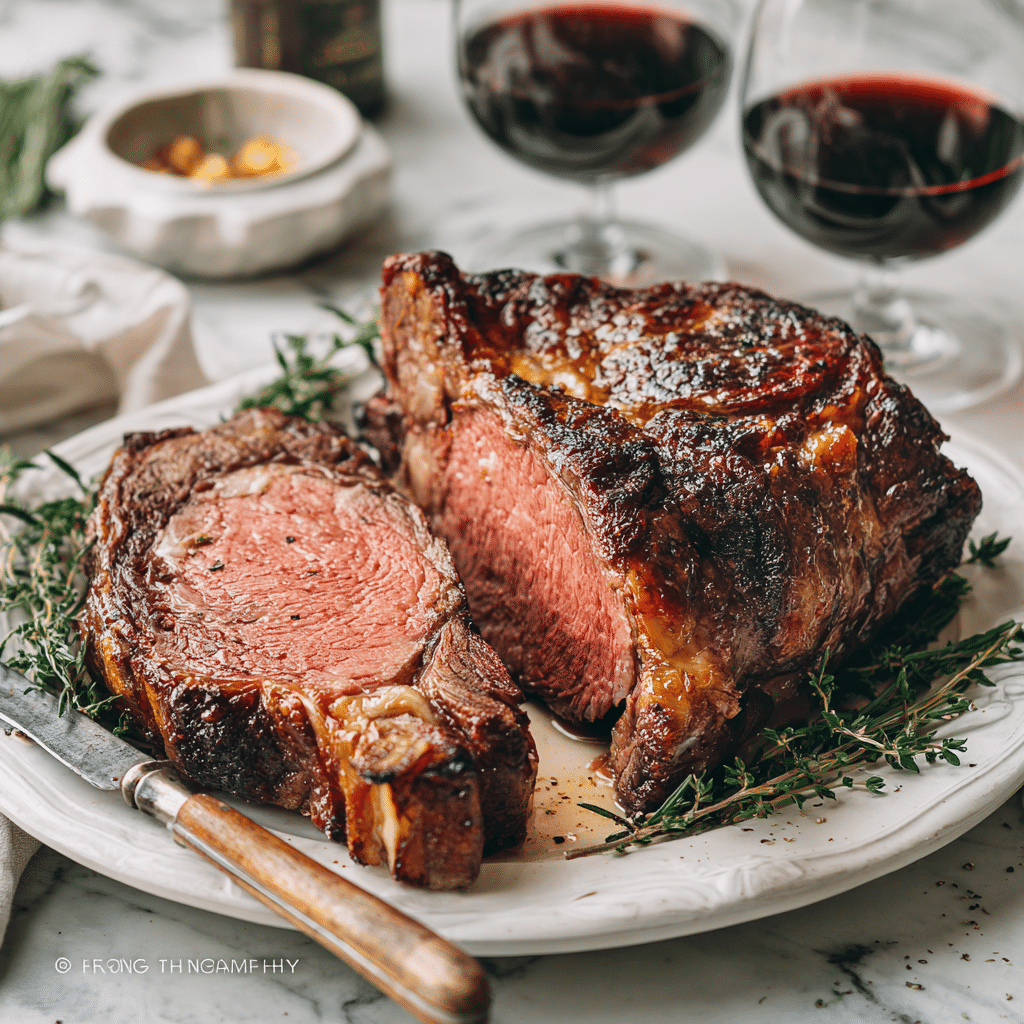
A perfect prime rib roast recipe isn’t just about the cut of beef it’s about the memory it creates. I still remember the first Christmas dinner I hosted. I wanted everything to feel special, so I decided to make a rib roast. I was nervous, of course it’s an impressive cut, and one mistake could ruin the night. But as the aroma of garlic, herbs, and sizzling fat filled the house, something magical happened. The stress melted away, replaced by laughter, wine, and that first, juicy slice that made everyone go quiet for a second. That’s when I knew: mastering cooking prime rib isn’t just about technique; it’s about creating a feast that brings people together.
This article will guide you through the entire process of making a perfect prime rib roast from choosing your meat to carving it like a pro. Whether it’s your easy Christmas dinner or a special family gathering, you’ll learn how to create a prime rib roast recipe that turns any meal into a celebration.
Choosing the Perfect Prime Rib Roast
Selecting the Cut
The foundation of any prime rib roast recipe starts at the butcher’s counter. Always go for a bone-in rib roast the bones not only enhance flavor but also help the meat cook evenly. A good rule of thumb: buy about one pound per person. If you’re serving six, a 6-pound roast is ideal.
Ask your butcher for a cut from ribs 6 through 12, known as the “prime rib section.” These ribs contain the tender, marbled meat that delivers that melt-in-your-mouth texture everyone craves. For smaller households, don’t worry you can still make a perfect prime rib even with smaller cuts (around 4–6 lbs).
Understanding Quality and Marbling
When you look at the meat, notice the creamy white streaks running through the red muscle that’s marbling. This fat is key to a juicy, flavorful roast. USDA Prime offers the most marbling, but USDA Choice will still yield fantastic results if cooked properly.
Always pick meat that’s deep red, not pale, with a firm texture and a generous fat cap. That layer of fat will self-baste the roast during cooking, keeping it succulent and rich.
Preparing and Seasoning Your Prime Rib
The Marinade Mix
A flawless prime rib roast recipe relies on simplicity. You don’t need fancy sauces just salt, pepper, garlic, and herbs. In a small bowl, mix:
- 1 teaspoon kosher salt per pound
- ½ teaspoon black pepper per pound
- 1 teaspoon minced garlic per pound
- 1 teaspoon each of fresh rosemary and thyme
- ½ teaspoon olive oil per pound
This blend creates a fragrant crust that enhances the natural flavor of the rib roast. The combination of garlic, herbs, and fat infuses the surface with savory richness.
Marinating Overnight
After rinsing and patting your roast dry, place it on a roasting rack (or directly on sliced onions if you prefer a rustic approach). Massage the herb mixture all over the roast, making sure every inch is coated. Then cover it tightly with plastic wrap and let it marinate overnight in the fridge.
The long rest time allows the salt and herbs to penetrate the outer layer of fat, seasoning it perfectly. When ready to cook, remove the roast and let it rest at room temperature for about two hours this ensures even cooking and prevents the meat from shocking in the oven.
Cooking the Prime Rib to Perfection
The Right Temperature and Technique
Cooking prime rib isn’t complicated but precision is everything. Preheat your oven to 450°F (230°C). This initial blast of heat sears the outside, locking in the juices and forming that irresistible crust. Roast for 15 minutes, then reduce the temperature to 325°F (165°C) and continue cooking until your desired doneness:
- Rare: 120°F
- Medium-rare: 130°F
- Medium: 135°F
Always use a meat thermometer guessing is risky. Remember that the roast will continue to cook while resting, rising another 5°F.
Resting Before Carving
Once the prime rib roast reaches temperature, remove it from the oven and tent it loosely with foil. Let it rest for at least 30 minutes. This is crucial if you slice too soon, all the juices will run out. During this rest, the fibers relax, and the roast becomes moist and tender.
As it rests, you’ll notice the golden crust glistening and the aroma of roasted garlic and herbs filling your kitchen. That’s your cue you’ve nailed it.
Serving and Carving the Rib Roast
Carving the Perfect Slice
Place the rested roast on a large cutting board. If bone-in, slice along the bones to separate them, then cut the roast into thick, juicy slices about ¾ inch each. The center should reveal a beautiful pink hue, with a crisp brown crust around the edges.
Arrange the slices on a warm platter and drizzle a little of the pan drippings over the top. The onions that roasted beneath the meat? Don’t discard them they’ve absorbed all the savory drippings and make the perfect garnish or gravy base.
Pairing and Presentation
Serve your prime rib roast with creamy mashed potatoes, roasted vegetables, or Yorkshire pudding. A simple horseradish cream sauce or red wine jus complements it beautifully.
Whether for Christmas, Thanksgiving, or any special gathering, this dish makes an easy Christmas dinner centerpiece that feels luxurious without being fussy.
As your guests take their first bite, the combination of tender beef, crispy crust, and aromatic herbs will remind them why this timeless prime rib recipe never goes out of style.
Tips, Tricks, and Common Mistakes to Avoid
Secrets for Success
- Bring to Room Temperature: Always let the roast rest before cooking to avoid uneven doneness.
- Don’t Skip the Thermometer: It’s the most reliable tool for perfect results.
- Let It Rest After Cooking: This is what makes the difference between dry and juicy.
- Use Fresh Herbs: Dried herbs can burn under high heat, altering the flavor.
- Save the Drippings: They’re liquid gold for gravy or au jus.
Mistakes That Ruin Prime Rib
- Overseasoning: Too much salt can overpower the delicate flavor of prime rib.
- High Heat Too Long: It can cause a tough exterior and dry interior.
- Skipping the Rest: Impatience will ruin all your hard work.
Cooking a prime rib roast isn’t intimidating once you understand the balance between time, temperature, and rest. Follow this recipe, and you’ll have a perfect prime rib worthy of any holiday feast.
FAQs
1. Should I cook prime rib with the fat side up or down?
Always roast with the fat side up. This way, the melting fat bastes the meat naturally.
2. Can I make prime rib ahead of time?
Yes. You can cook it a day before, then reheat gently in the oven at 250°F.
3. How do I store leftovers?
Wrap tightly in foil and refrigerate for up to three days. Reheat in a low oven to preserve tenderness.
4. Can I use this recipe for boneless prime rib?
Absolutely. Adjust cooking time slightly boneless roasts cook faster.
Prime Rib Roast Recipe
- Total Time: 2 hrs 20 min
- Yield: 6 servings 1x
Description
Classic prime rib roast recipe with garlic, rosemary, and thyme for a perfectly juicy and flavorful dinner.
Ingredients
A bone-in prime rib roast
1/3 medium onion per pound
1 tsp kosher salt per pound
1/2 tsp black pepper per pound
1 tsp minced garlic per pound
1 tsp rosemary per pound
1 tsp thyme per pound
1/2 tsp olive oil per pound
Instructions
1. Rinse and dry the roast.
2. Mix seasonings and olive oil.
3. Rub mixture over the roast.
4. Place on onions in roasting pan.
5. Marinate overnight.
6. Roast at 450°F for 15 minutes.
7. Reduce to 325°F and cook to desired doneness.
8. Rest for 30 minutes before carving.
Notes
Let roast come to room temperature before cooking.
Use a meat thermometer for best accuracy.
- Prep Time: 20 min
- Cook Time: 2 hrs
- Category: Main Course
- Method: Roasting
- Cuisine: American
Nutrition
- Serving Size: 1 slice
- Calories: 850
- Sugar: 1g
- Sodium: 720mg
- Fat: 68g
- Saturated Fat: 30g
- Unsaturated Fat: 35g
- Trans Fat: 0g
- Carbohydrates: 2g
- Fiber: 0g
- Protein: 55g
- Cholesterol: 210mg
Keywords: Prime Rib Roast Recipe, Perfect Prime Rib, Rib Roast